


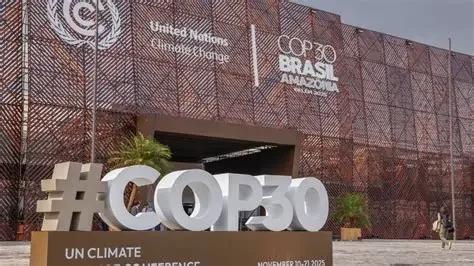
EU/ENG - COP30 is taking place in Belém, Brazil, in the heart of the Amazon. For two weeks, until November 21, nearly two hundred countries are discussing new global actions to combat the climate crisis.
This year's Conference of the Parties to the United Nations Framework Convention on Climate Change (UNFCCC) is the thirtieth.
Exactly ten years after the Paris Agreement, COP30 comes at a crucial moment: the world must define new national emissions reduction targets (NDCs) for 2035 and decide how to finance the transition in the most vulnerable countries.
Why the Amazon?
Belém is the capital of the state of Pará, at the mouth of the Amazon River. It is the first time a COP has been held in the heart of the tropical forest, an area crucial to global climate stability. It's not just a dramatic choice; the Brazilian government wanted the "Amazon COP" to also be a conference of those experiencing the climate crisis on the front lines: indigenous communities, small farmers, and young activists. By choosing Belém, the United Nations explains, it wanted to send a civic message through climate diplomacy, which, by acting as a vector of a symbolic global signal, is brought "into" the planet's most important ecosystem, currently struggling due to fires, drought, and deforestation.
What's at stake
Global temperatures will continue to rise between 2.3 and 2.5°C by the end of the century, well beyond the safety threshold. This is what UNEP experts say in their latest Emissions Gap Report, which estimates that even if current commitments are met. To stem this trend and keep it within 1.5°C, emissions would need to decrease by 42% by 2030 compared to 2019 levels. But so far, we're going in the opposite direction.
COP30 will test the credibility and coherence of national policies.
The European Union at COP30
The European Union, a staunch supporter of the green transition, arrives in Belém with positions notoriously out of step with global demographic giants like China and India. Trump's arrival in the White House is pushing the United States away from the front lines of the fight for environmental sustainability. Furthermore, many countries in the global South are calling for more economic support and concrete commitments. The host country, Brazil (Belém), is led by a president, Lula, who has sought to revitalize the Amazon as a laboratory for green transition and a platform for international cooperation, but the country also remains a major exporter of oil and agricultural raw materials.
The two weeks of November 2025 will serve to determine whether we can coordinate a global strategy with decisions that will, or will not, guide global climate policies for the next decade.
The context is complex, if not hostile, but the stakes are clear: the possibility of keeping the promise of the Paris Agreement and limiting global warming to a safe level.
Protecting the planet is the mission established by the United Nations, and this forum has the merit of bringing together almost every country in the world.
EU/ITA- A Belém, in Brasile, si sta svolgendo la COP30, nel cuore dell’Amazzonia. Per due settimane, fino al 21 novembre, quasi duecento Paesi stanno discutendo nuove azioni globali contro la crisi climatica.
Quella di quest’anno è la trentesima Conferenza delle Parti della Convenzione quadro delle Nazioni Unite sui cambiamenti climatici (UNFCCC).
A dieci anni esatti dall’Accordo di Parigi, la COP30 arriva in un momento decisivo: il mondo deve definire nuovi obiettivi nazionali di riduzione delle emissioni (NDC) al 2035, e decidere come finanziare la transizione nei Paesi più vulnerabili.
Perché in Amazzonia
Belém è la capitale dello stato del Pará, alla foce del Rio delle Amazzoni. È la prima volta che una COP si tiene nel cuore della foresta tropicale, un’area cruciale per la stabilità del clima globale. Non è solo una scelta ad effetto, il governo brasiliano ha voluto che la “COP dell’Amazzonia” fosse anche una conferenza delle persone che vivono la crisi climatica in prima linea: comunità indigene, piccoli agricoltori, giovani attivisti. Scegliendo Belém, spiegano le Nazioni Unite, si è voluto dare un messaggio civile con la diplomazia climatica che agendo da vettore di un segnale simbolico-planetario, viene portata “dentro” l’ecosistema più importante del pianeta, oggi in difficoltà per incendi, siccità e deforestazione.
Cosa c’è in gioco
Le temperature globali continueranno a salire tra 2,3 e 2,5 °C entro fine secolo, ben oltre la soglia di sicurezza. Lo sostengono gli esperti dell’UNEP, nell'ultimo Emissions Gap Report, stima che anche rispettando gli impegni attuali. Per arginare questo trend e tenerlo entro l'1,5°C, le emissioni dovrebbero diminuire del 42% entro il 2030 rispetto ai livelli del 2019. Ma finora stiamo andando nella direzione opposta.
Alla COP30 si misureranno credibilità e coerenza delle politiche nazionali.
L'unione europea alla Cop 30
L’Unione europea, convinta sostenitrice della transizione verede, arriva a Belém con posizioni notoriamente poco in linea con colossi demografici mondiali come Cina ed India. L'avvento di Trump alla Casa Bianca sta sfilando gli Stati Uniti dalla prima linea della lotta per la sostenibilità ambientale Inoltre molti Paesi del Sud globale chiedono più sostegno economico e impegni concreti. Lo stesso Paese ospitante, il Brasile Belém con il è guidato da un presidente, Lula, che ha voluto rilanciare il ruolo dell’Amazzonia come laboratorio di transizione verde e piattaforma di cooperazione internazionale, ma il Paese resta anche un grande esportatore di petrolio e materie prime agricole.
Le due settimane di novembre del 2025 serve a comprendere se si riesce a coordinare una strategia globale con decisioni che saranno in grado, o meno, di orientare le politiche climatiche globali per il prossimo decennio.
Il contesto è complesso, se non ostile ma la posta in gioco è chiara: la possibilità di mantenere la promessa dell’Accordo di Parigi e limitare il riscaldamento globale entro la soglia di sicurezza.
Proteggere il Pianeta è la mission decisa dalle Nazioni Unite e questo forum ha il pregio di riunire quasi tutti i Paesi del mondo.
analisti associati @europolitiche.it*
* This contribution is not a journalistic article but an analytical brief - Questo contributo non è un articolo giornalistico ma un brief analitico