


"The Hill of Europe" Community Library has been established in Florence at Europolitiche's Cultural Association new headquarters located in Via San Domenico 22. This project, open to everyone, aims to promote European values and integration as a natural progression from the activities undertaken in the recent years at national and international level.
The founders of Europolitiche possess a vast personal collection of approximately 4,000 volumes on the history of European integration, economic and social policies, international relations, European institutions, cultural policies of various countries. The library also includes a significant selection of volumes in foreign languages, philosophy, political science, and economics, as well as works by influential figures who have shaped the history of European integration. Special collections include the complete works of authors such as Spinelli, Monnet, Schuman, Delors, Veil, Padoa Schioppa, Camus, Baumann, and Keynes, as well as thematic collections of particular interest.
The Library
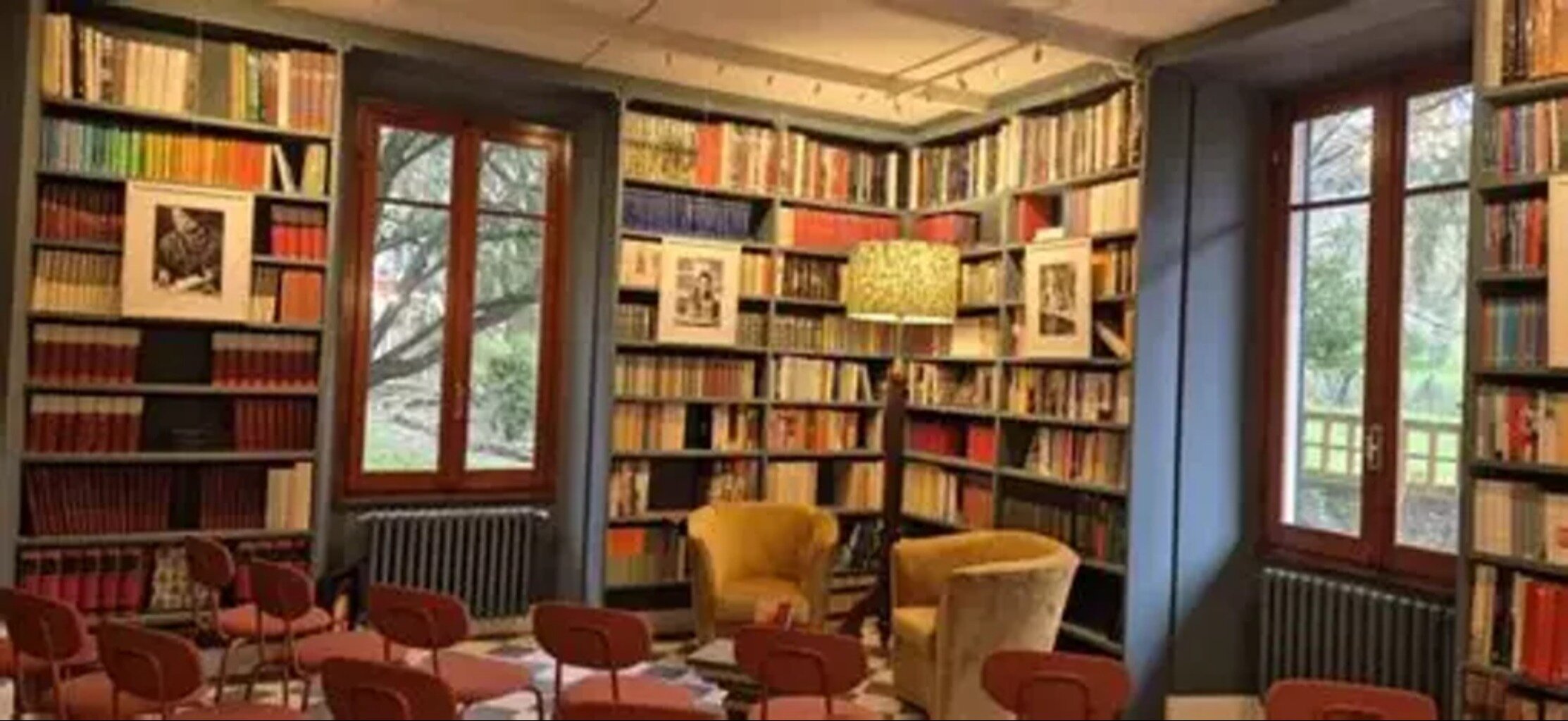
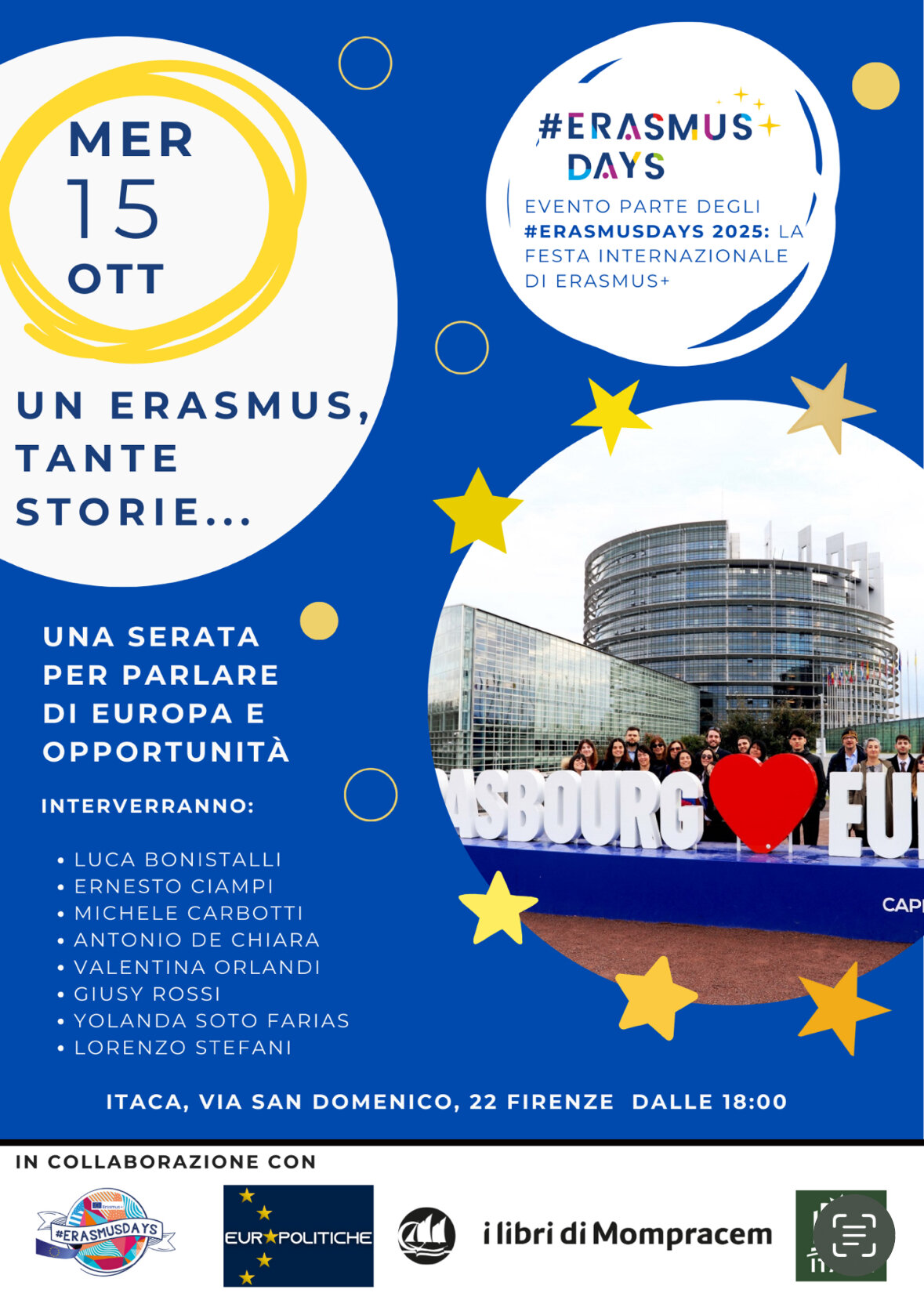
The library will be located on the Fiesole hill, sharing its spaces with the Itaca literary and artistic residence, which offers three guest rooms for study, writing, and creative stays, and with the publishing house I Libri di Mompracem, a historic Florentine brand inspired by travel literature. The library also offers a 50-seat room for cultural events and a recently renovated 25-seat workshop space. The name "Collina d'Europa" (The Hill of Europe) pays homage to the prestigious European institutions present in Fiesole, such as the European University Institute, attended by approximately 4,000 researchers each year, and the Historical Archives of the European Union, which preserve a unique documentary heritage worldwide, such as the original copies of the Ventotene Manifesto and the EU's founding Treaties. The project is part of the participatory process initiated by the Town of Fiesole for the candidacy of the city as Italian Capital of Culture in 2028.
Why a European community library?
In the recent years, libraries have transformed their traditional function, from places for the preservation and consultation of books and documents to spaces for community development of new and cultural experiences, as well as places for socialization, especially for the most vulnerable people. No longer, or not only, places for individual and silent study, they are now meeting places, providing information and educational, intergenerational, and intercultural encounters, regaining their role as a "third place", useful for developing skills and urban resilience. Libraries can be the driving force behind inclusion, fulfilling a connecting function more suited to our society's needs for aggregation, experimentation, co-planning, learning, as well as reading and study. Daily life in libraries is a continuous experiment in democracy and cultural mediation. The idea is that books can change people's lives, as Adriano Olivetti theorized in the 1940s, an idea so powerful that it suggests libraries for workers and their families should be included among factory social services. Libraries, both real and ideal, considered as agents of human development, places for education in cultural values, spaces for personal growth, libraries created in the balance between civic engagement and social action.
Who is it for?
The project is addressed particularly to younger generations, but more generally to everyone, with the aim of fostering greater awareness of their sense of belonging as European citizens. We see the European Library as a project for community development, social cohesion, and sustainability, open to everyone's contributions, with donations of books and/or small sums for the cataloging and digitization of the library collection. It will also be possible to organize training opportunities, cultural events, and Erasmus+ international mobility projects for the exchange of best practices. The project ultimately aims to involve other European cities as ideal places to experiment best practices in sustainability and accessibility to culture. Libraries can act as key facilitators of a good transition by serving as hubs for sharing information and knowledge, providing easy access to resources and skills related to the Millennium Development Goals.
Community is not to be understood theoretically, but as something extremely concrete, where a person can actually live their relational life, where the person is at the center. Thus, the Library becomes a place to imagine the future, to rebuild hope and trust.
What are the next steps?
Our European Community Library is a participatory cultural volunteering process, scheduled to launch in December 2025 and lasting one year. It will pursue the following objectives and activities:
- Establishment of the book fund and raising capital through crowdfunding;
- Acquisition of cataloging and loan management software;
- Cataloging of at least 1,000 volumes of the library collection for loan availability;
- Gradual digitization of the collection;
- Formalization of membership in the Florentine Libraries Network (Sdiaf);
- Promotion of educational, cultural, and reading activities;
- Promotion of three international artistic residencies for writers;
- Promotion of intercultural and intergenerational dialogue, with a thematic reading circle;
- Promotion of education in active citizenship and media literacy;
- Promotion of Erasmus+ international mobility projects for the exchange of best practices.
Support our project by donating a book or making a small donation to the link on the crowdfunding platform:
https://www.produzionidalbasso.com/project/una-biblioteca-di-comunita-per-la-collina-d-europa/
For more information, please contact info@europolitiche.it