


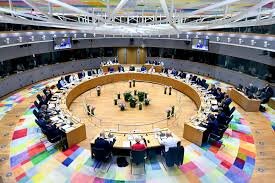
EU/ENG - On 26 and 27 June 2025, the 27 heads of state and government of the European Union met in Brussels. Trade policy with the United States, relations with Ukraine and Israel, sanctions against Russia and climate objectives: a detailed overview of the main debates at the summit
- The confrontation and concerns about US tariffs
Europeans have only a dozen days left to find a solution and avoid a trade war with the United States. On 9 July, without a trade deal with the Europeans, Trump could increase customs duties on imports from the EU to 50%. The Commission is still looking for a formula that can appease the American president.
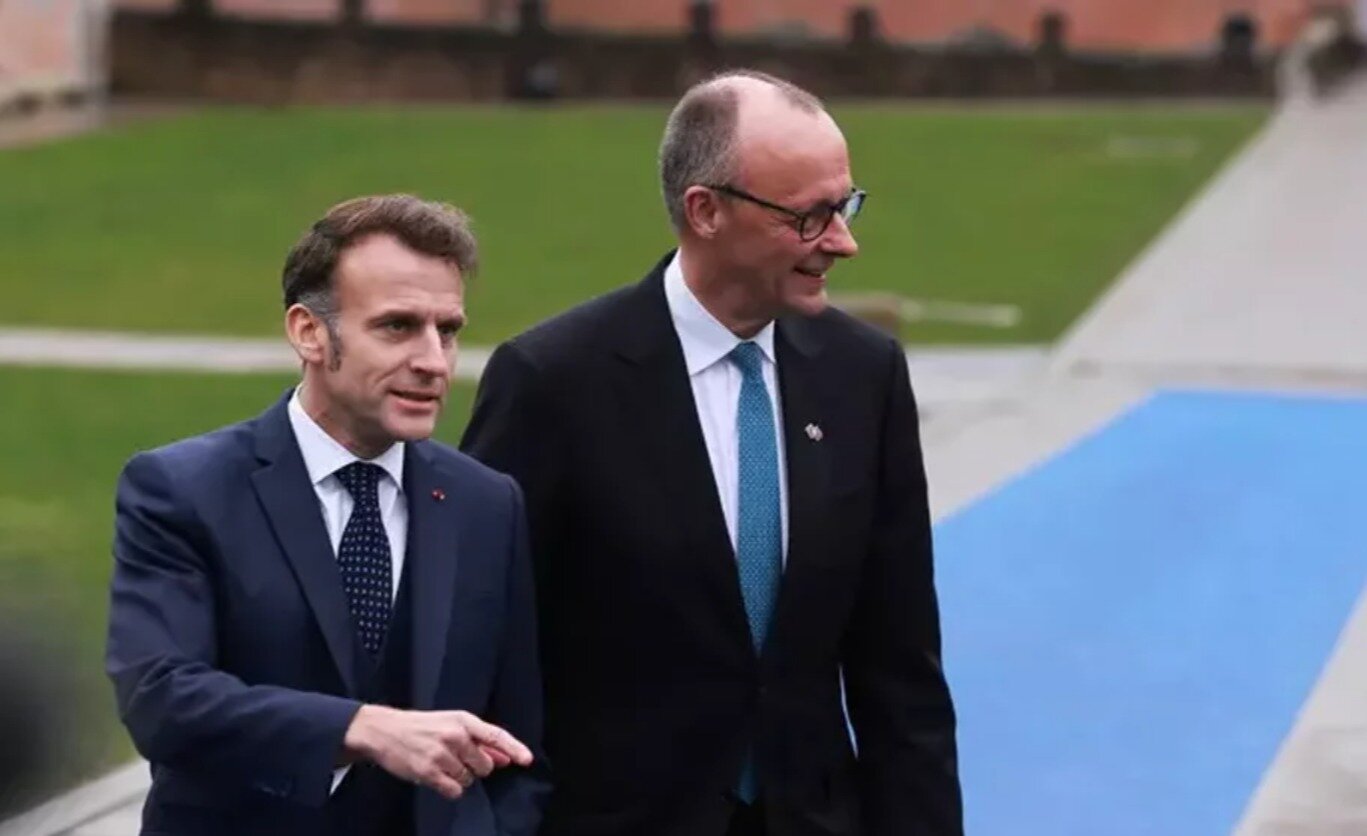
However, member states are becoming impatient. German Chancellor Merz wants to act quickly, even if that means accepting a general tax on European imports but with large loopholes in it, i.e. exemptions that would hit some key sectors of the economy: steel, cars, chemicals, aeronautics, etc. French President Macron is also aiming for a quick deal, but not at any price. "If the Americans ultimately choose to maintain 10% tariffs on our economy, there will inevitably be compensation on goods and products sold by Americans on the European market," the French president said, adding that Europeans are "neither naive nor weak." "All options are on the table," Ursula von der Leyen explained, referring to trade negotiations with the United States in the press conference following the summit.
A return to the status quo without tariffs seems unlikely, however. Is a trade war avoidable? "Today we received the final document from the United States with a view to continuing negotiations. We are evaluating it," announced the President of the European Commission.
- Ukraine
The heads of state and government reiterated their full support for Ukraine. Political, financial, military and humanitarian support... as has been the case for over three years. European military, financial and humanitarian aid remains essential for Ukraine. They even increased in the first four months of 2025, to the point of filling the void left by the United States after Trump returned to power.
Orbán reiterated his refusal to Ukrainian accession to the EU. Added to this is the freezing of the accession process. Following this refusal, Orbán and his Slovakian counterpart Fico also refused to support the implementation of the 18th package of sanctions against Russia. Hungary also refused to sign the European Council conclusions on Ukraine. Poland, which holds the rotating presidency of the European Union, will do everything it can to ensure that this 18th package is adopted, before handing over to Denmark on 1 July. This happened literally at the end of the Council. People were already leaving the room and Antonio Costa, the President of the Council, said: 'Oh, I forgot one little thing, the renewal of the sanctions. I guess that's fine with everyone.' And the decision was approved in total silence."
- Relations with Israel: postponement of any decision until July
Several EU member states are now calling for a suspension of the association agreement (including Spain, Ireland, Belgium, Slovenia). France, in a joint statement with the United Kingdom and Canada on May 19, has already threatened "concrete measures" against the Jewish state. "Unless the EU does something concrete today or within two weeks, then every member state, including Slovenia and some countries that think like us," warned Slovenian Prime Minister Robert Golob yesterday, "will have to take the next steps alone." "European citizens," Irish Prime Minister Micheál Martin also said, "find it incomprehensible that Europe does not seem to be able to put pressure on Israel to stop this war in Gaza, to stop the continuous massacre of children and innocent civilians. The war must end." Spanish Prime Minister Pedro Sanchez was even harsher. "It is more than obvious," he thundered, "that Israel is violating Article 2 of the agreement. We have launched 18 packages of sanctions against Russia for its aggression and Europe, with its double standards, is not capable of suspending an association agreement". The European Socialist Party (and, in Italy, the leaders of the PD, M5S and AVS) are also asking for a suspension.
No way: Germany in particular, for obvious historical reasons, does not want to hear about a suspension, which would require unanimity, arguing that it is essential to maintain an open "channel" with Israel. Italy and Austria are on the same line (even though the latter was among those who had requested the report from the EEAS), Hungary is also against it. The result is a postponement to July 2025, "taking into account the situation on the ground".
In short, we'll talk about it again. at the Foreign Affairs Council scheduled for 15 July in Brussels,
- Climate objectives 2040
Europe's climate ambitions were also on the table of the heads of state and government. The topic was not officially on the summit agenda. Yet, the leaders of the 27 member states discussed it extensively. A long and lively debate focused on Europe's climate objectives for 2040.
Because, although Europe has already committed to reducing its CO2 emissions by 55% by 2030 and has also set a carbon neutrality target by 2050, it still does not have a clear target for 2040. A decision has not yet been taken. A proposal is expected on Wednesday 2 July. Based on scientific advice, the European Commission could propose a 90% reduction in CO2 emissions.
But this figure divides the member states. There are those in favor, such as Spain and Sweden. There are those against: Poland and Italy. At the summit, France led the debate with Macron criticizing the Commission for wanting to set a very ambitious goal without specifying how to achieve it. France is calling for flexibility, for example by including nuclear energy in climate efforts, but also pragmatism so as not to further reduce the competitiveness of European companies. The Commission now has four days to decide.
- 15 Member States met separately on migration
On the sidelines of the summit, Italy's Meloni and Denmark's Frederiksen brought together European leaders who are fighting for a tougher migration policy. About fifteen countries are part of this club, including Belgium. Germany also joined this summit. The requests from this group to speed up the processing of asylum applications have already been taken into account by President von der Leyen.
ITA - Il 26 e 27 giugno 2025, i 27 capi di Stato e di governo dell'Unione Europea si sono incontrati a Bruxelles. Politica commerciale con gli Stati Uniti, relazioni con l'Ucraina e Israele, sanzioni contro la Russia e obiettivi climatici: una panoramica dettagliata dei principali dibattiti svoltisi al vertice
Il confronto e le preoccupazioni sui dazi statunitensi
Agli europei restano solo una dozzina di giorni per trovare una soluzione ed evitare una guerra commerciale con Gli Stati Uniti. Il 9 luglio, senza un accordo commerciale con gli europei, Trump potrebbe aumentare i dazi doganali sulle importazioni dall'UE al 50%. La Commissione sta ancora cercando una formula che possa placare il presidente americano.
Tuttavia, gli Stati membri stanno diventando impazienti. Il cancelliere tedesco Merz vuole agire rapidamente, anche se ciò significa accettare un'imposta generale sulle importazioni europee ma con ampie scappatoie al suo interno, ovvero esenzioni che colpirebbero alcuni settori chiave dell'economia: siderurgia, automobili, prodotti chimici, aeronautica, ecc. Anche il presidente francese Macron mira ad un accordo rapido, ma non a qualsiasi prezzo. " Se alla fine gli americani sceglieranno di mantenere dazi del 10% sulla nostra economia, ci sarà inevitabilmente una compensazione sui beni e sui prodotti venduti dagli americani sul mercato europeo ", ha affermato il presidente francese, aggiungendo che gli europei non sono " né ingenui né deboli ". "Tutte le opzioni sono sul tavolo", ha spiegato Ursula von der Leyen, riferendosi ai negoziati commerciali con gli Stati Uniti nella conferenza stampa successiva al vertice.
Un ritorno allo status quo senza dazi sembra però improbabile. Una guerra commerciale è evitabile? " Oggi abbiamo ricevuto il documento finale dagli Stati Uniti in vista della prosecuzione dei negoziati. Lo stiamo valutando ", ha annunciato la Presidente della Commissione Europea.
Ucraina
I capi di Stato e di governo hanno ribadito il loro pieno sostegno all'Ucraina. Sostegno politico, finanziario, militare e umanitario... come avviene da oltre tre anni. Gli aiuti militari, finanziari e umanitari europei rimangono essenziali per l'Ucraina. Sono addirittura aumentati nei primi quattro mesi del 2025, al punto da colmare il vuoto lasciato dagli Stati Uniti dal ritorno al potere di Trump.
Orban ha ribadito il suo no all'adesione ucraina all'UE. A ciò si aggiunge il congelamento del processo di adesione. A seguito di questo rifiuto, anche Orbán e il suo omologo slovacco Fico si sono rifiutati di sostenere l'attuazione del 18° pacchetto di sanzioni contro la Russia. L'Ungheria si è inoltre rifiutata di firmare le conclusioni del Consiglio europeo sull'Ucraina. La Polonia, che detiene la presidenza di turno dell'Unione europea, farà tutto il possibile affinché questo 18° pacchetto venga adottato, prima di passare il testimone alla Danimarca il 1° luglio. È successo letteralmente alla fine del Consiglio. I presenti stavano già uscendo dalla sala e Antonio Costa, il Presidente del Consiglio, ha detto: 'Oh, dimenticavo una piccola cosa, il rinnovo delle sanzioni. Immagino che vada bene a tutti'. E la decisione è stata approvata in totale silenzio."
I rapporti con Israele: rinvio di ogni decisione a luglio
Vari Stati membri dell’Ue chiedono ora una sospensione dell’accordo di associazione (tra questi Spagna, Irlanda, Belgio, Slovenia). La Francia, in una dichiarazione congiunta con Regno Unito e Canada del 19 maggio, ha già minacciato «concrete misure» allo Stato ebraico. «A meno che l'Ue non faccia qualcosa di concreto oggi o nel giro di due settimane, allora ogni Stato membro, compresa la Slovenia e alcuni Paesi che la pensano come noi – ha avvertito ieri il premier sloveno Robert Golob - dovrà fare i prossimi passi da solo». «I cittadini europei – ha dichiarato anche il premier irlandese Micheál Martin - trovano incomprensibile che l'Europa non sembri in grado di fare pressione su Israele per fermare questa guerra a Gaza, per fermare il continuo massacro di bambini e civili innocenti. La guerra deve finire». Ancora più duro il premier spagnolo Pedro Sanchez. «È più che evidente – ha tuonato – che Israele sta violando l’articolo 2 dell’accordo. Abbiamo varato 18 pacchetti di sanzioni contro la Russia per la sua aggressione e l’Europa, con i suoi doppi standard, non è capace di sospendere un accordo di associazione». Una sospensione la chiede anche il Partito socialista europeo (e, in Italia, i leader di Pd, M5s e Avs).
Niente da fare: soprattutto la Germania, per evidenti ragioni storiche, non vuole saperne di una sospensione, che richiederebbe l’unanimità, sostenendo che sia fondamentale mantenere un «canale» aperto con Israele. Sulla stessa linea anche l’Italia e l’Austria (anche se quest’ultima era tra quanti avevano chiesto il rapporto al Seae), contraria pure l’Ungheria. Il risultato è un rinvio a luglio 2025, “tenendo conto della situazione sul terreno”. Se ne riparla insomma al Consiglio Esteri in calendario a Bruxelles il 15 luglio,
Obiettivi climatici 2040
Anche le ambizioni climatiche europee erano sul tavolo dei capi di Stato e di governo. Il tema non figurava ufficialmente nell'agenda del vertice. Eppure, i leader dei 27 Stati membri ne hanno discusso ampiamente. Un lungo e vivace dibattito si è incentrato sugli obiettivi climatici dell'Europa per il 2040.
Perché, sebbene l'Europa si sia già impegnata a ridurre le proprie emissioni di CO2 del 55% entro il 2030 e abbia anche fissato un obiettivo di neutralità carbonica entro il 2050, non ha ancora un obiettivo chiaro per il 2040. Una decisione non è ancora stata presa. Una proposta è attesa per mercoledì 2 luglio. Sulla base di pareri scientifici, la Commissione europea potrebbe proporre una riduzione del 90% delle emissioni di CO2.
Ma questo dato divide gli Stati membri. Ci sono quelli a favore, come Spagna e Svezia. Ci sono quelli contrari: Polonia e Italia. Al vertice, la Francia ha guidato il dibattito con Macron critico verso la Commissione per aver voluto fissare un obiettivo molto ambizioso senza specificare come raggiungerlo. La Francia chiede flessibilità, ad esempio includendo l'energia nucleare negli sforzi per il clima, ma anche pragmatismo per non ridurre ulteriormente la competitività delle aziende europee. La Commissione ha ora quattro giorni per decidere.
15 Paesi membri si sono riuniti a parte sulle migrazioni
A margine del vertice, l'italiana Meloni e la danese Frederiksen hanno riunito i leader europei che si battono per una politica migratoria più severa. Circa quindici paesi fanno parte di questo club, tra cui il Belgio. A questo vertice si è unita anche la Germania. Le richieste da parte di questo gruppo di accelerare l'elaborazione delle domande di asilo sono già state prese in considerazione dalla Presidente von der Leyen.
analisti inviati @europolitiche.it *
* questo contributo non è un articolo giornalistico ma un brief analtico